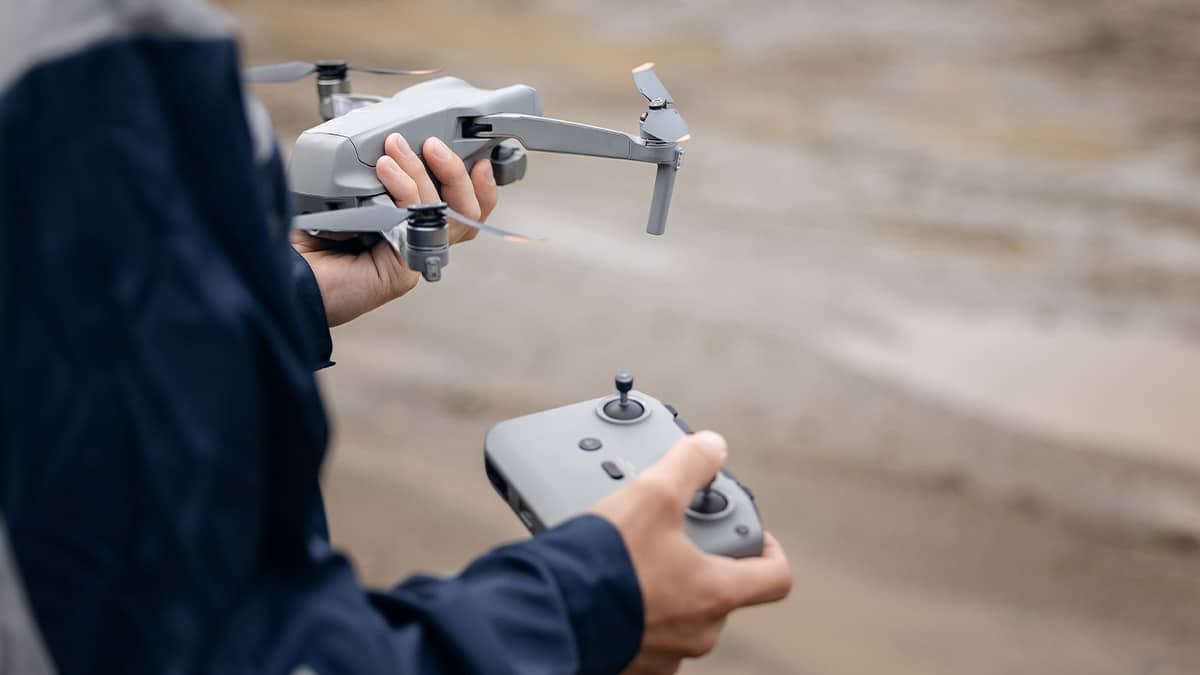
Flying a drone legally in Dubai depends on approval from both the General Civil Aviation Authority (GCAA) and the Dubai Civil Aviation Authority (DCAA), supported by the required operator certification. Recreational flying remains suspended, while commercial use continues under strict licensing and regulatory control.
Beyond a single application, the process moves across federal and local authorities, each responsible for different parts. Progress moves forward only when those requirements align. Registration and certification must match operational approval before any flight can take place. When one element falls out of place, delays follow quickly.
Across real estate, construction, media production, and surveying, drone use continues to expand. That shift has brought tighter oversight, with greater attention on safety standards and controlled airspace use, along with operator capability. Licensing now reflects that shift through clearer expectations around training and documentation, alongside accountability.
With preparation in place, the process moves more smoothly. Clear documentation and a working understanding of how GCAA and DCAA requirements align help keep applications moving, especially when training has already been completed. Trade License Zone supports businesses through each stage, helping manage approvals and reduce friction along the way.
Who regulates drones in Dubai?
Drone operations in Dubai fall under the joint oversight of the GCAA and the DCAA, with approval from both required before any commercial activity can take place.
At a federal level, the GCAA sets the framework that governs how drones operate across the UAE. Licensing standards, operator certification, and airspace rules all sit within its scope. Registration of remotely piloted aircraft systems (RPAS) also runs through this authority, along with the knowledge requirements operators must meet before flying commercially. Passing the GCAA exam confirms that operators understand aviation regulations, safety procedures, and restricted zones.
Within Dubai, the DCAA focuses on how those rules apply on the ground. Drone registration sits at the center of its role, alongside approvals for where and how drones can be used across the emirate. Operational planning, designated flying zones, and compliance with local restrictions all fall under its oversight. Even with federal approval in place, local authorization still determines whether a drone can be used in a specific location.
Because each authority manages a different layer of regulation, progress relies on both sets of requirements moving together. A federal license on its own does not allow a drone to operate within Dubai, and local registration does not replace GCAA certification. Each step builds on the last, with both authorities reviewing documentation, operator credentials, and intended use before granting approval.
As that structure carries through, applications move forward with information from one stage, often feeding into the next, where consistency across documents becomes important. Delays tend to happen when details do not match or when one approval is pursued without the other already in place. Keeping both sides aligned helps the process move with fewer interruptions and supports a smoother path to full authorization.
Types of drone license in Dubai
The license you need depends on how you plan to use your drone in Dubai, with different approvals in place for commercial work and more advanced operations, while personal use remains restricted.
Commercial drone license
Where a drone is used to generate income, a commercial license becomes mandatory, covering work such as aerial photography, inspections, surveying, mapping, and real estate filming. Before approval is granted, operators must pass the GCAA exam and complete registration with both the GCAA and DCAA. Certification confirms the operator understands aviation rules, while registration covers the drone itself and its approval for use, with both needing to align before commercial operations can move forward.
Professional drone permit
More advanced operations fall under a professional drone permit, with film production, media work, and projects in complex environments typically requiring this level of approval. Authorities look closely at operator experience in these cases, often expecting clear evidence of technical skill and flight planning capability, along with the ability to manage risk in controlled or sensitive environments. The level of scrutiny tends to reflect both the scale of the project and the conditions under which the drone will be used.
Recreational drone use
Recreational drone flying remains suspended in Dubai, with the restriction still under review by the DCAA. Anyone planning to fly for personal use should check official channels before making arrangements, as approval is not currently granted for recreational activity.
Step-by-step guide to getting a commercial drone license in Dubai
A commercial drone license in Dubai involves registration, certification, and approval across both the GCAA and DCAA, with each stage building on the last.
Step 1: Register with the DCAA
The process begins through the DCAA, where drone and operator details move into review. Company information, trade license details, Emirates IDs of operators, passport copies, and full drone specifications, such as model and serial number, all form part of the submission. A color image of the drone, proof of insurance, and an operator training certificate are also required. Any mismatch in these details can slow progress or trigger additional requests.
Step 2: Pass the GCAA exam
Progress continues through the GCAA UAS exam, which must be completed before a commercial license can be issued. Booking takes place online, with the assessment covering aviation regulations, safety procedures, and restricted airspace. Preparation helps, as the material goes beyond basic drone handling and focuses on operating within controlled environments. Trade License Zone can help keep this step aligned with the wider application and reduce the risk of delays.
Step 3: Obtain a No Objection Certificate (NOC)
Once the exam is complete, the process moves into NOC application through the official government portal. RPAS registration details, the drone model, supporting documents, and a copy of the company’s trade license are submitted at this stage. Approval confirms that the operator holds authorization to carry out commercial drone activity.
Step 4: Complete operator licensing
Verification then shifts to operator training, where certification from an approved provider is reviewed. Training centers such as Sanad Academy or Exponent confirm that operators meet the required standards for handling commercial drone equipment. Authorities rely on this certification to ensure that only qualified individuals are permitted to operate drones in professional environments.
Step 5: Receive your commercial UAS certificate
With all requirements in place, the process concludes with the issuance of a Commercial UAS certificate from the GCAA. This certificate must be available during operations and may be requested during inspections. Timelines can vary, particularly where multiple approvals are involved, so allowing time for review helps avoid delays when planning commercial activity.
Documents required for drone registration in Dubai
Having the right documents prepared before applying helps avoid delays, particularly where approvals from both the GCAA and DCAA need to move in parallel.
Applications typically require the following:
• Company name, address, and trade or commercial license number
• Emirates ID of the drone operator
• Passport copy with visa page (for non-nationals)
• Passport-size photo with a white background
• RPAS type, model, and serial number
• Color image of the drone
• Operator training certificate from a DCAA-approved provider
• Proof of insurance
Dubai drone rules and no-fly zones
Flying a drone in Dubai requires staying within approved zones while following strict limits on altitude, weight, and location.
Operations are limited to designated green zones shown on the UAE My Drone Hub app, which maps out where drones can be used safely. Outside these zones, approval is not granted, even where registration and licensing are already in place.
Alongside location controls, limits apply to how drones are flown. Weight must not exceed 5 kg, and altitude is capped at 400 feet, helping reduce risk and maintain alignment with controlled airspace requirements.
Beyond these limits, some areas remain restricted regardless of licensing status. Airspace near airports, residential zones, government buildings, and defense sites falls outside permitted use. Public parks and any location not clearly marked as an approved flying zone are also excluded.
Because these restrictions apply at both federal and local levels, compliance depends on checking the correct zones before each flight. Conditions can change, and operating outside approved areas can lead to penalties, even where all licenses and registrations are in place.
Fines and penalties for flying without a license in Dubai
Flying a drone without approval in Dubai can result in fines of up to AED 50,000, with more serious cases carrying further legal consequences.
Penalties at this level typically apply where drone use creates safety risks or breaches restricted airspace. In more serious cases, enforcement can extend beyond fines, with legal consequences that may include imprisonment of up to one year under Article 69 of GCAA regulations.
Alongside financial penalties, authorities may confiscate drones used in violation of the rules, particularly where operations take place outside approved zones or without the required licenses and permits.
Because enforcement applies at both federal and local levels, even minor breaches can escalate where safety or security is affected. Staying within approved zones and ensuring all documentation is in place helps reduce the risk of penalties during operation.
Rules for tourists flying drones in Dubai
Flying a drone as a tourist in Dubai requires registration with the DCAA, along with a valid operator training certificate and proof of approval before any flight takes place.
Regardless of size or weight, registration still applies, with even compact models falling under the same requirements. Alongside registration, operators need a recognized training certificate from an accredited center, confirming familiarity with local aviation rules and safety procedures, without which approval is not granted.
For many travelers, completing registration and training ahead of arrival helps avoid delays, particularly where documentation needs to be verified or submitted after entering the country. Bringing a drone without prior preparation can slow the process, especially when approvals are still pending.
With approval in place before any flight can go ahead, documentation may be requested during operation, making it important to have proof of registration, certification, and authorization available. In some cases, additional permissions may be required depending on how and where the drone will be used, particularly for filming or commercial-style activity.
As restrictions continue to shape how drones can be used, recreational flying remains suspended, so checking official DCAA updates before making plans becomes important, especially when travel arrangements include bringing a drone into the country. Staying within approved zones and following local guidance helps avoid disruption and keeps operations compliant throughout the visit.
About Trade License Zone
Navigating business setup in the UAE often involves working across multiple authorities, each with its own requirements and approval process. Trade License Zone supports businesses through that process, helping bring clarity to each step and keeping applications aligned from the start.
For companies looking to operate drones commercially, licensing forms part of a wider setup that may include trade license registration, visa processing, and ongoing compliance. Managing these elements together can reduce delays, particularly where approvals need to move in parallel.
Working with the right support makes it easier to coordinate documentation, meet regulatory expectations, and avoid common setbacks during the application process. Trade License Zone works with businesses at different stages, whether setting up for the first time or expanding into new areas of operation.
If you’re planning business setup in Dubai, you can explore your options or contact Trade License Zone for guidance and assistance.
Frequently Asked Questions
Is recreational drone flying allowed in Dubai?
Recreational drone flying is currently suspended in Dubai, with authorities continuing to review the restriction. Checking official DCAA updates before making plans helps avoid issues, as approval is not being granted for personal use at this time.
Do I need a license to fly a DJI Mini in Dubai?
Yes, registration and approval still apply, regardless of the drone’s size or weight. Compact models such as the DJI Mini series fall under the same requirements as larger drones, so flying without approval is not permitted.
How much does a commercial drone license cost in Dubai?
Costs vary depending on training, registration, and licensing requirements. Fees can include the GCAA exam, training through an approved provider, and registration with both the GCAA and DCAA, with the total depending on the scope of the operation.
What are the penalties for flying a drone without a license in Dubai?
Fines can reach up to AED 50,000 for operating a drone without the correct approval, with more serious cases leading to additional legal consequences. Authorities may also confiscate equipment used in violation of the rules.